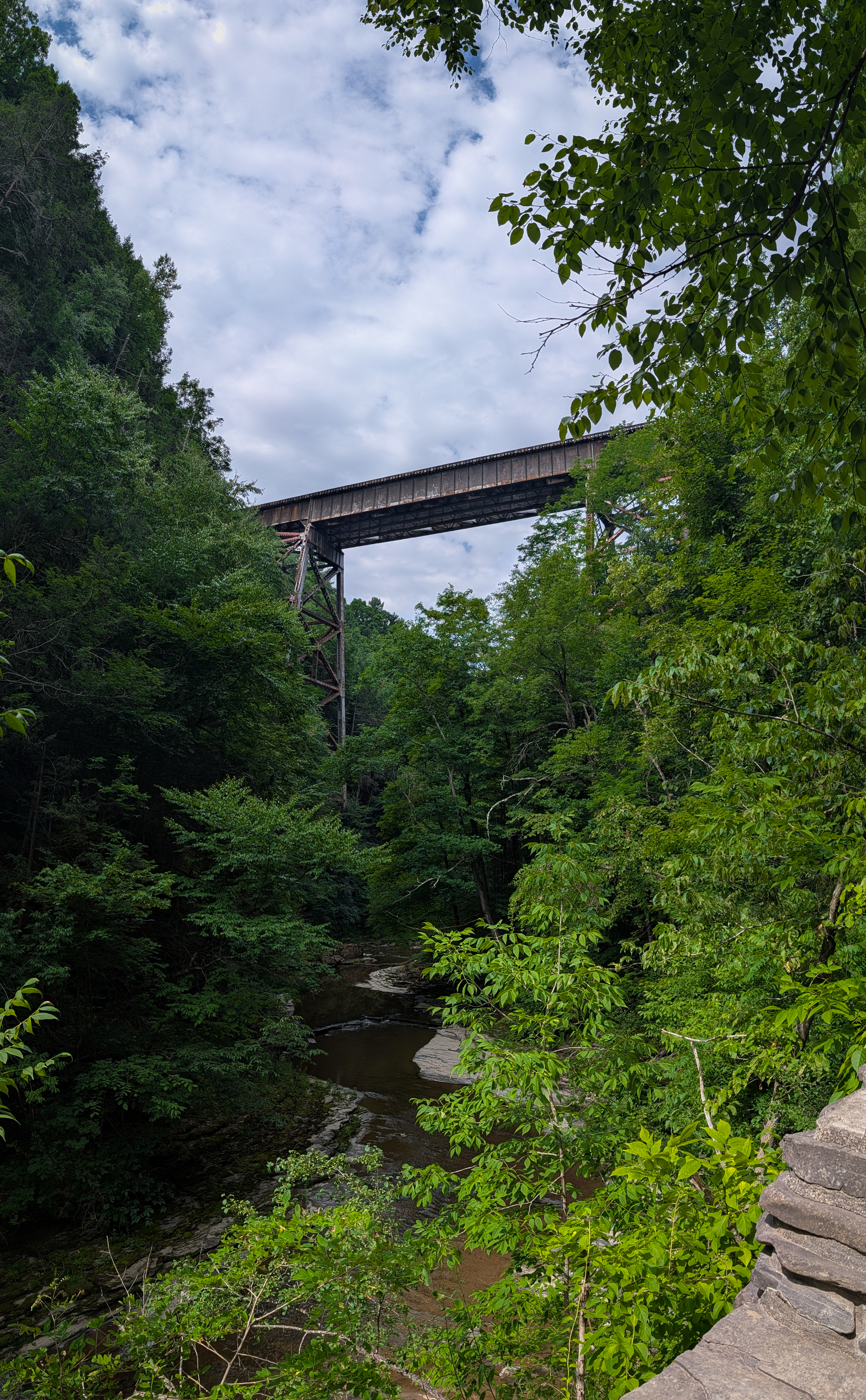
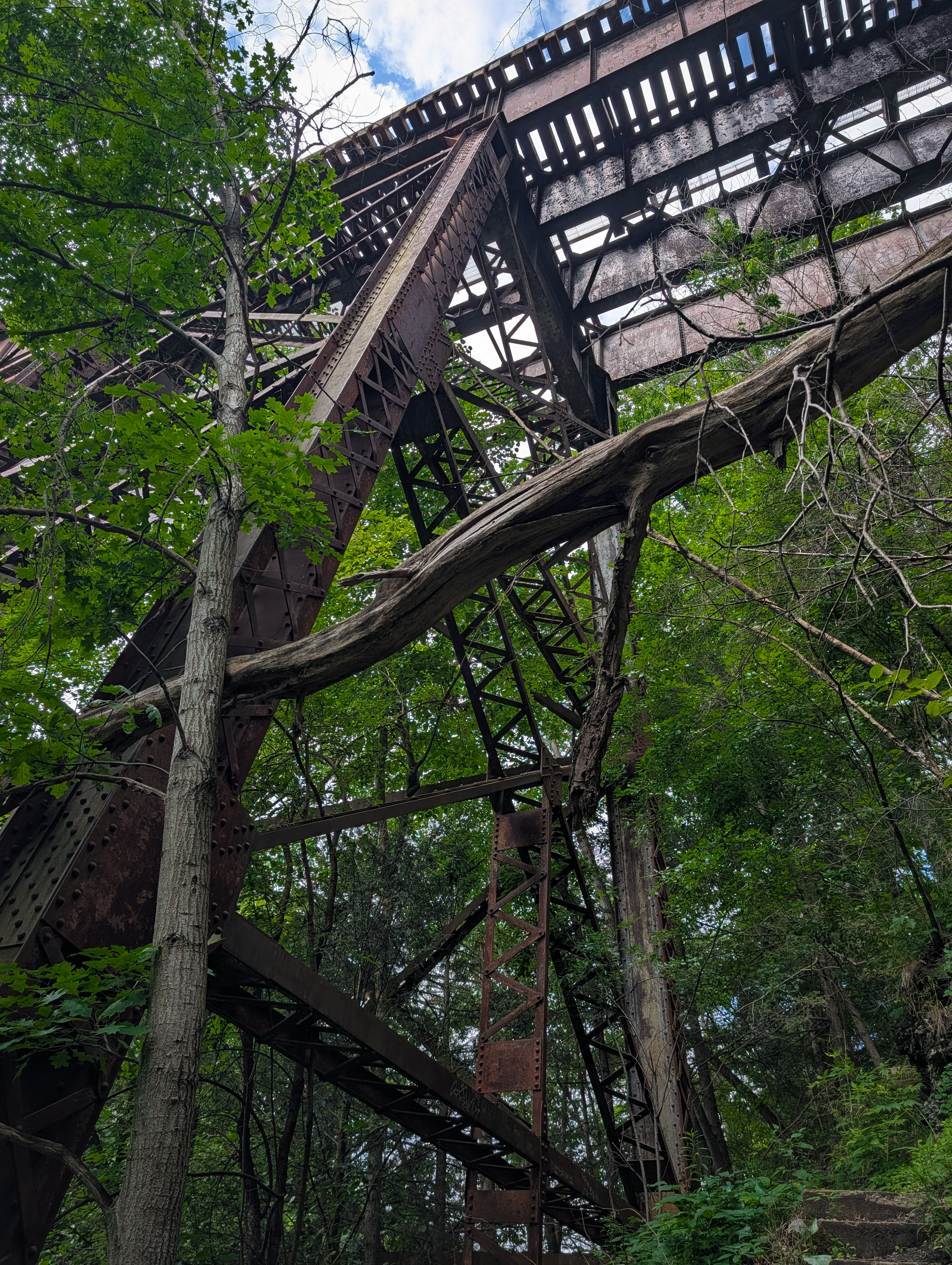
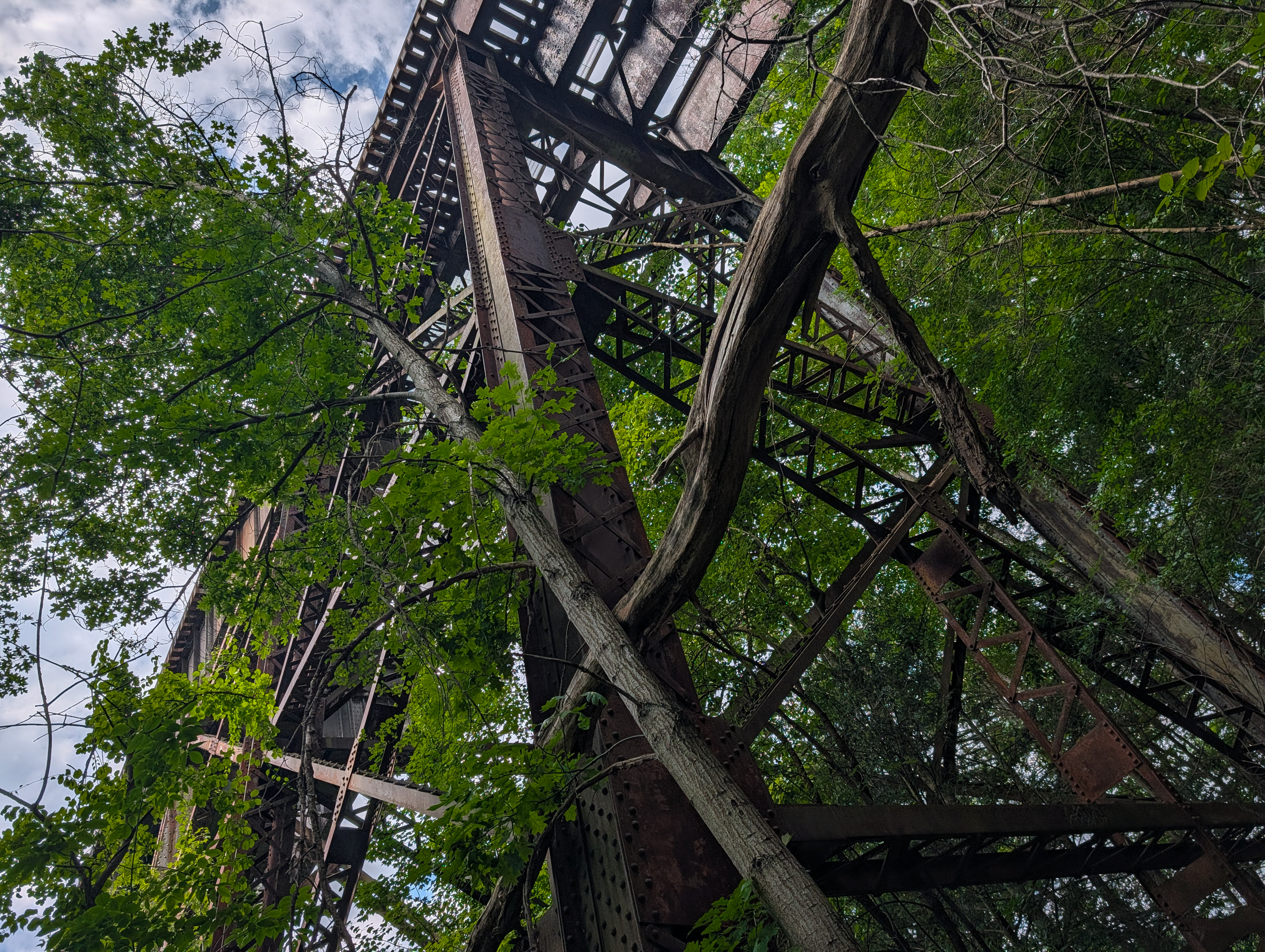
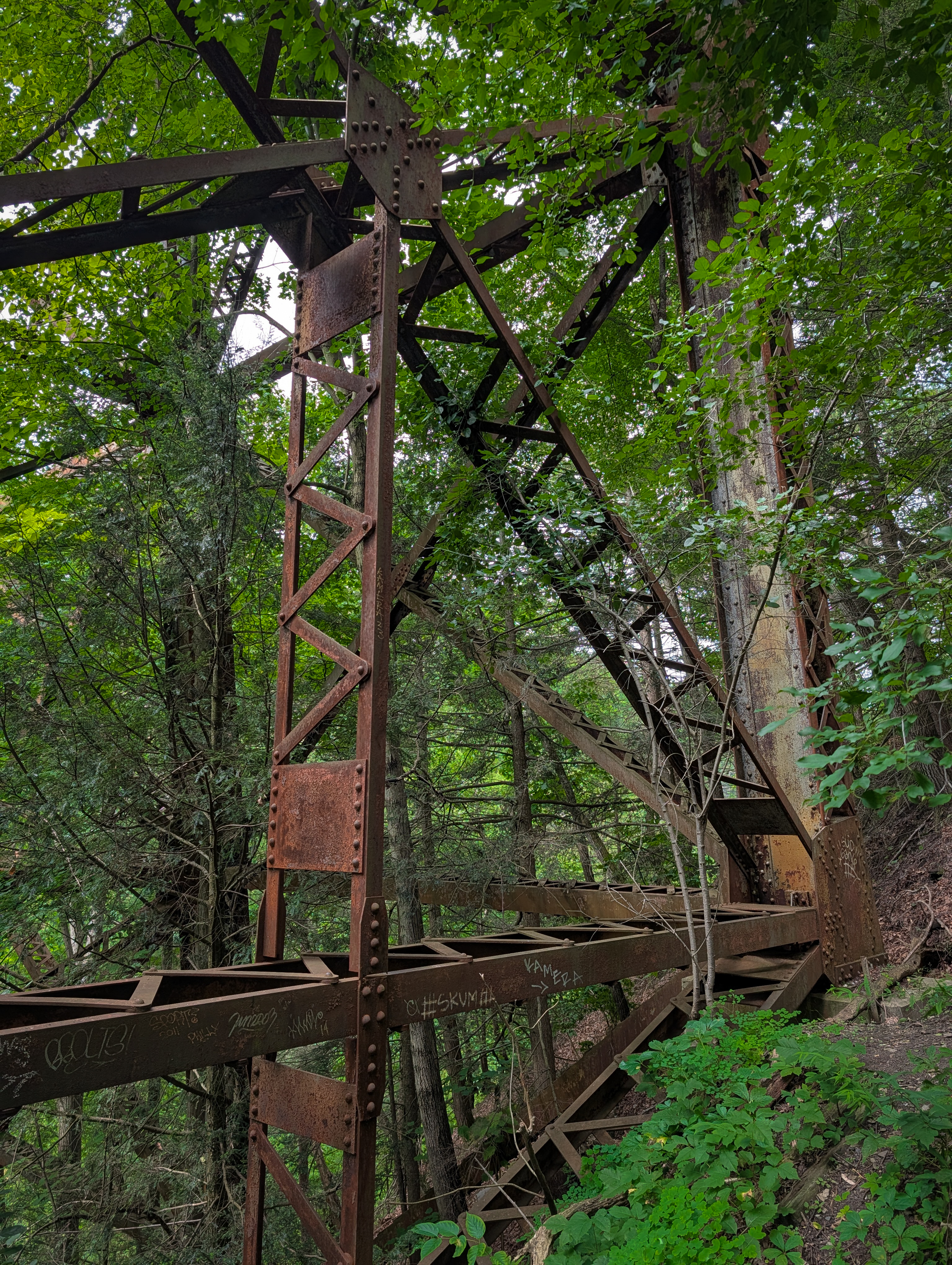
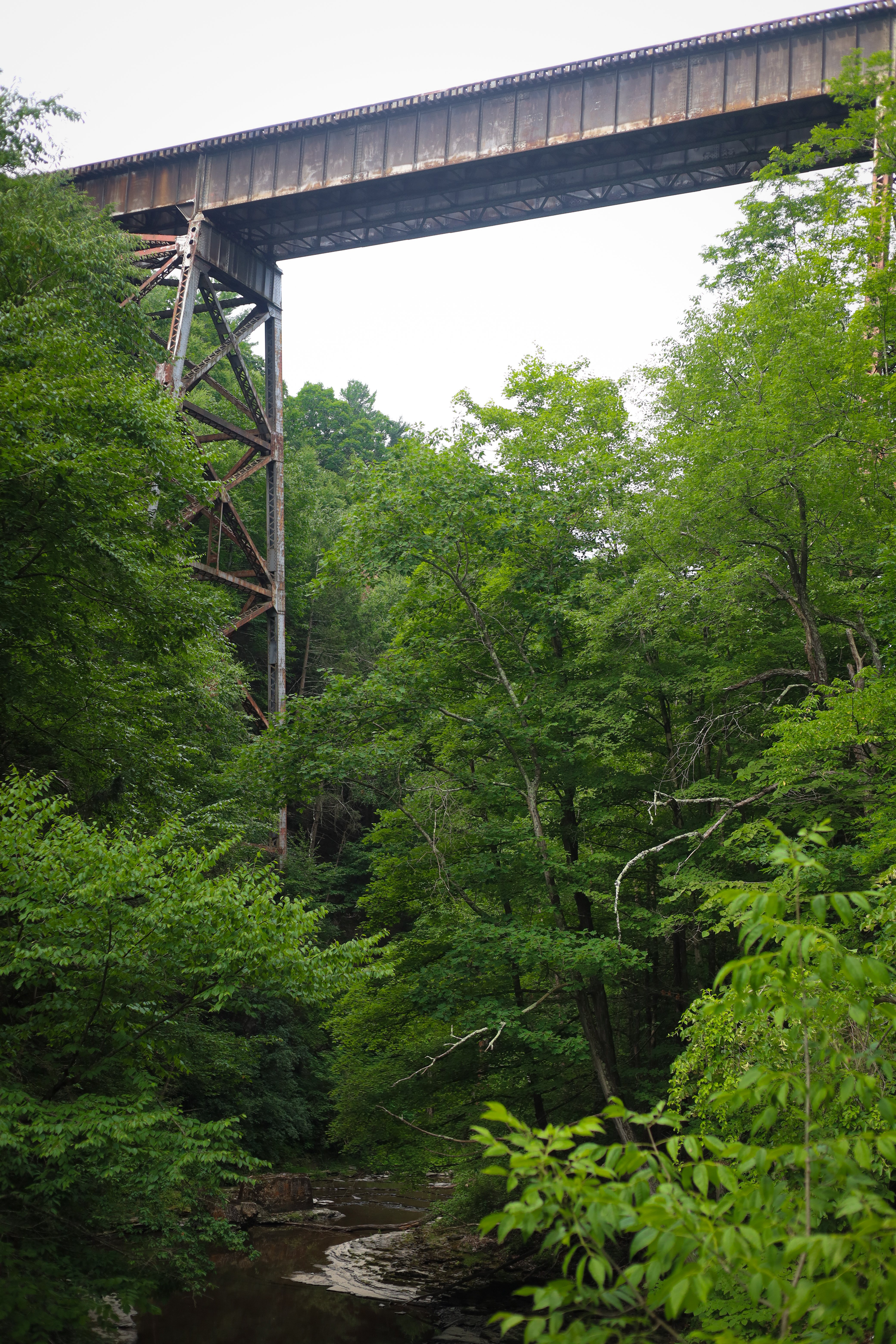
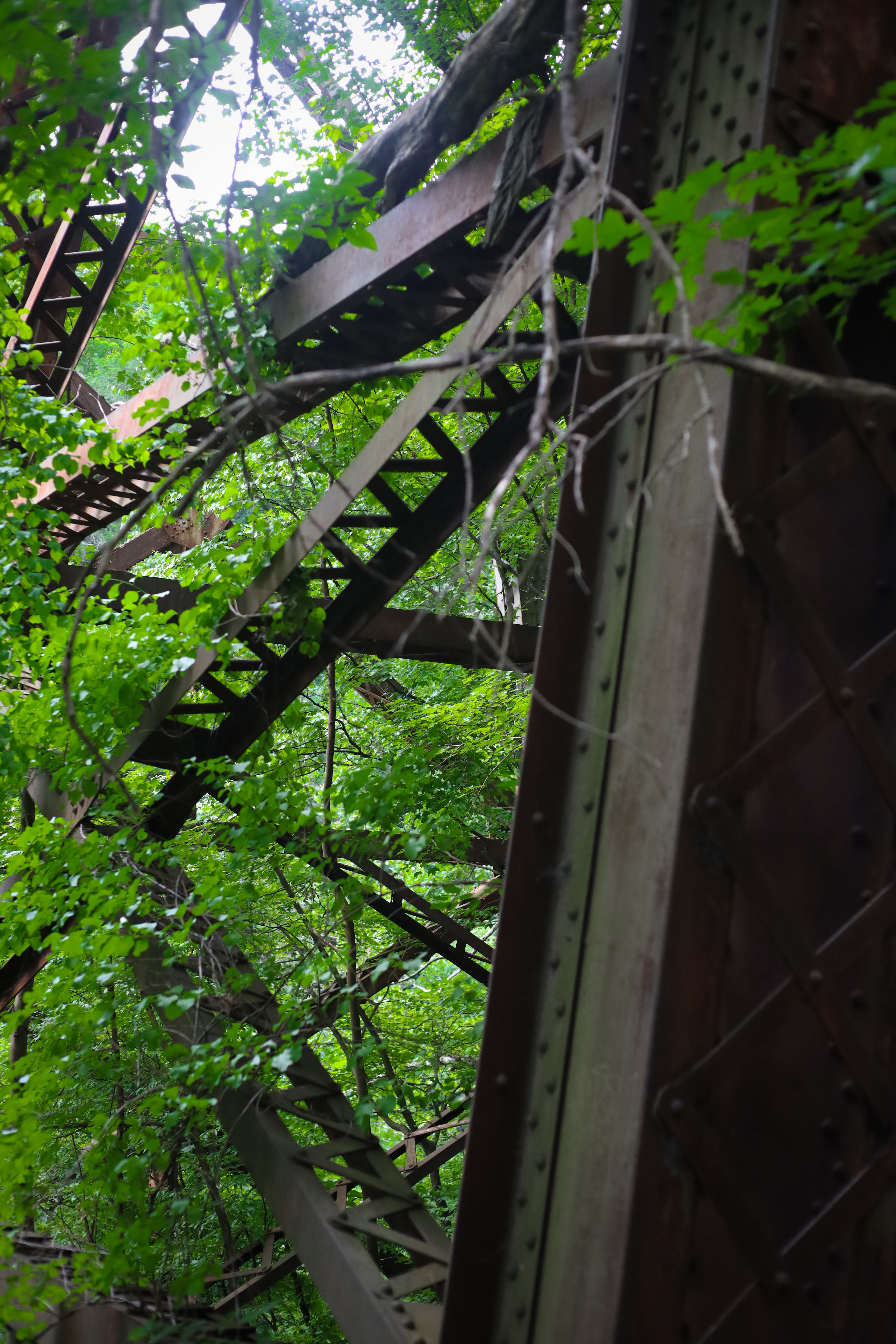
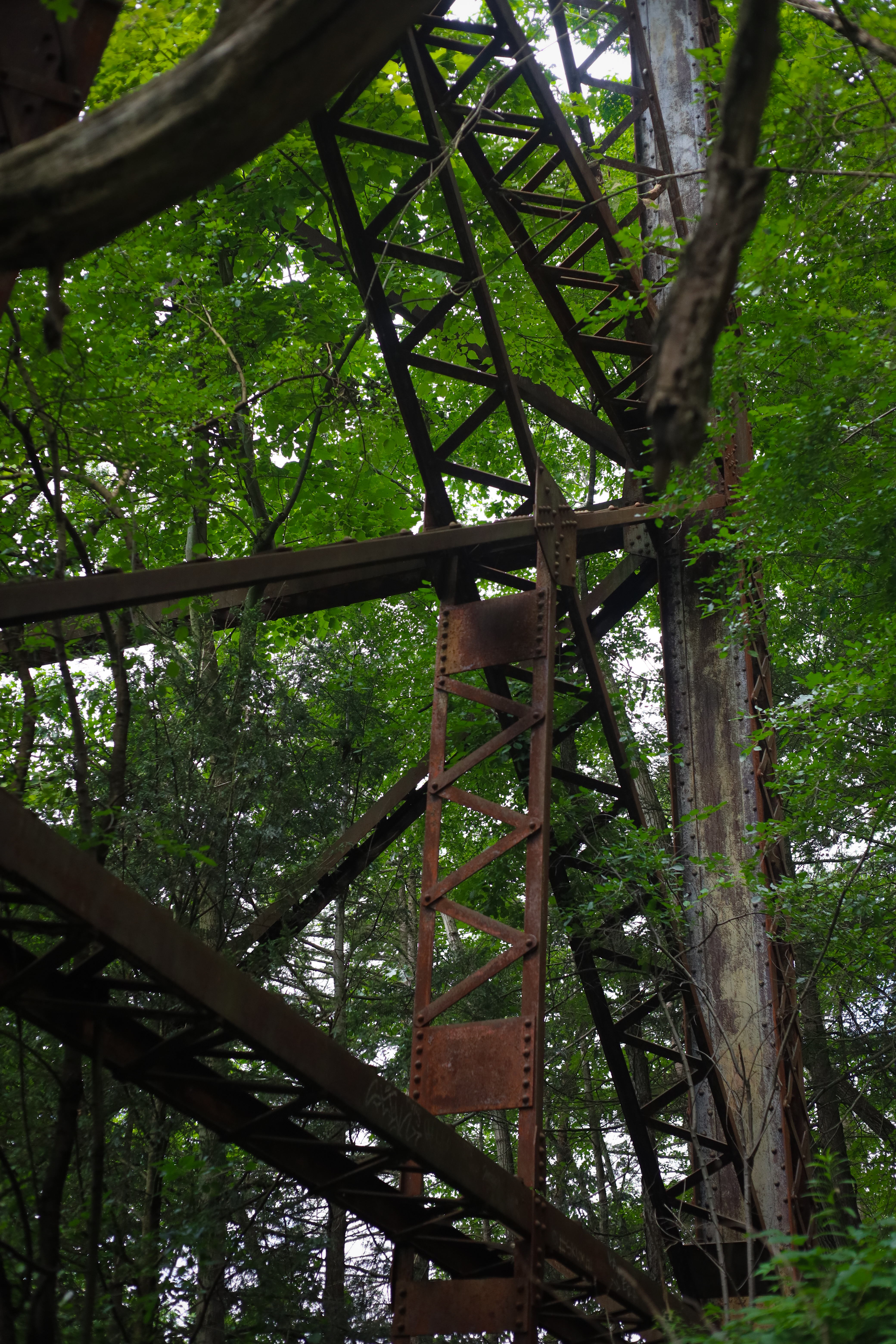
Deep in the Glen Creek the skeletal timber of The Ghost Trestle of Glen Creek still spans the empty air.
Towering roughly 150 feet above the carved shale cliffs and cascading waterfalls of Watkins Glen State Park, the massive railroad trestle spanning Glen Creek is one of the most striking industrial landmarks in New York’s Finger Lakes region.
The high span was originally constructed in the late 1870s for the Syracuse, Geneva and Corning Railway (later part of General George Magee’s Fall Brook Railway, and subsequently absorbed into the New York Central Railroad system). Engineered to haul semi-bituminous coal from Pennsylvania north toward Geneva and the Erie Canal, the line required an audacious crossing high over the gorge. At the time of its construction, it ranked among the highest railroad spans in the state.
As rail travel flourished in the late 19th and early 20th centuries, the route transformed into a vital artery not just for freight, but for scenic tourism. Excursion trains brought thousands of visitors from across the Northeast directly to the rim of Watkins Glen, allowing passengers to gaze straight down into the shadowy chasm below.
The trestle survived major regional disasters, including the catastrophic flood of July 1935, which unleashed devastating torrents through Glen Creek and destroyed most of the glen’s early footbridges, wooden stairs, and riverside infrastructure.
As regional rail traffic shifted and lines consolidated through Penn Central and Conrail in the latter half of the 20th century, regular passenger service faded into history.
For hikers following the Gorge Trail or South Rim Trail today, looking up from the misty canyon floor reveals a stark contrast: the geometric lines of late-19th-century steel suspended above 12,000 years of post-glacial water and stone.










Comments are closed.