Menu

Books

Diavola Book Cover Diavola Book Cover

Diavola

Diavola

​The ghost wasn’t the problem here—the protagonist was.

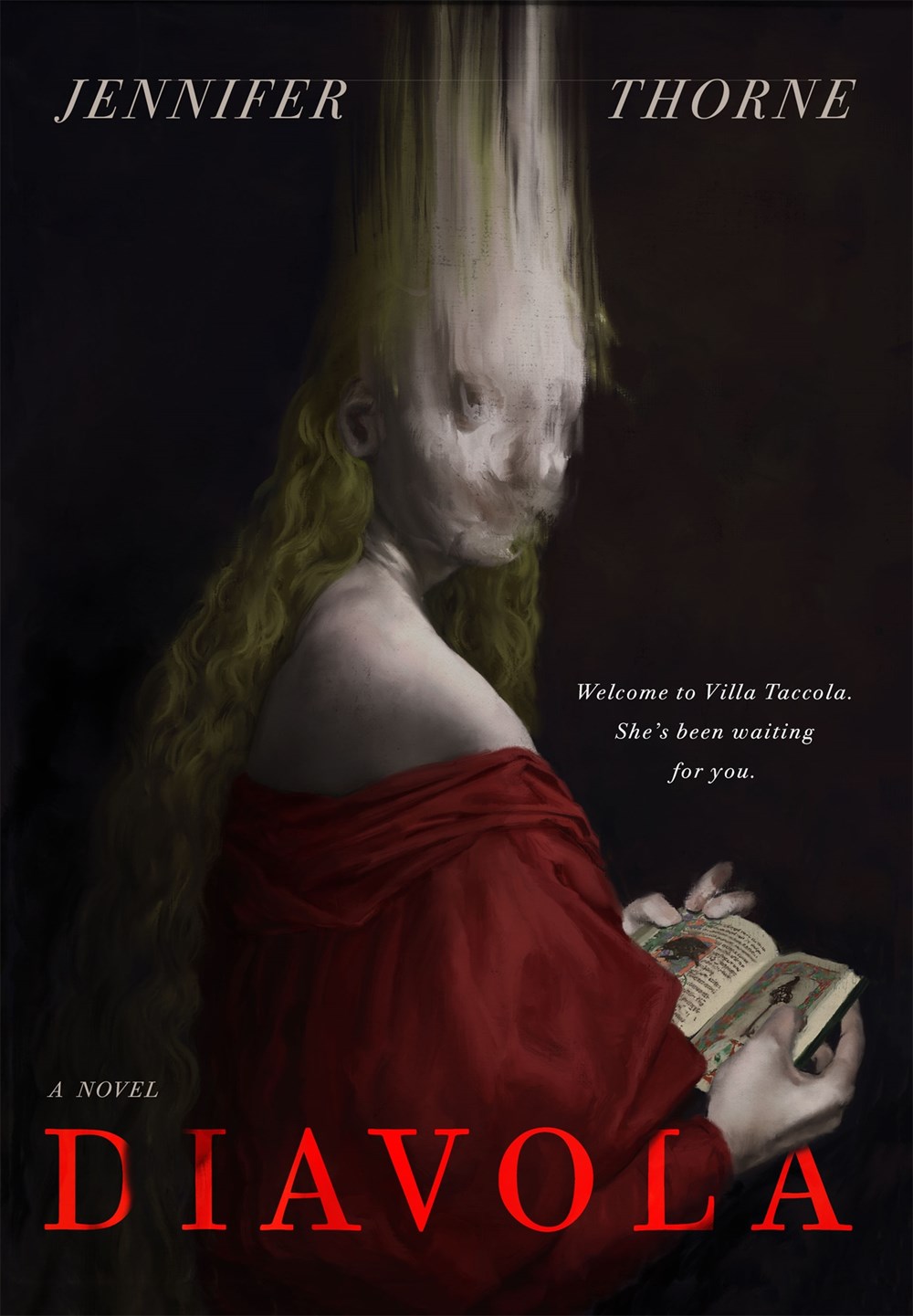
​While the premise of a malevolent presence haunting an isolated Italian villa sounds great on paper, being trapped in Anna’s head for hundreds of pages was pure reader exhaustion. Instead of compelling tension, you get an endless internal monologue of self-righteous martyrdom. Anna spends the entire book convinced she’s the lone, flawless pillar holding the universe together while looking down on literally everyone—her family, coworkers, ex, you name it.

​When a haunted house story has you actively rooting for the malevolent entity to take out the main character just to give everyone some peace, the book has lost the plot. A solid setting wasted on one of the most grating, insufferable characters I’ve read in a long time.

​Skip the trip to Villa Vascello.

Counting The Cost Cover Counting The Cost Cover

Counting The Cost

Counting The Cost

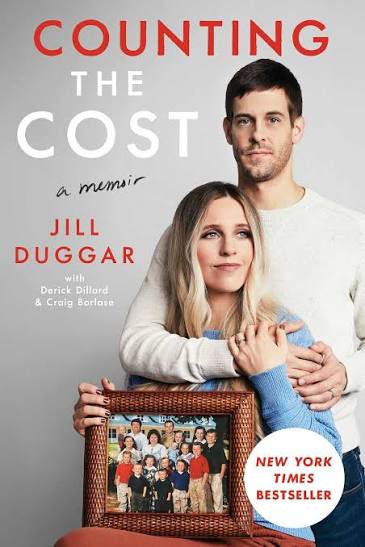
Counting the Cost by Jill Duggar: pure roses and thorns. She tells the hard truths about her family and religious upbringing without resorting to cheap villainization. Hurt deeply by the system, yet still holding onto her faith. A surprisingly graceful, thought-provoking read.

There Is No Antimemetics Division Cover There Is No Antimemetics Division

There Is No Antimemetics Division

There Is No Antimemetics Division

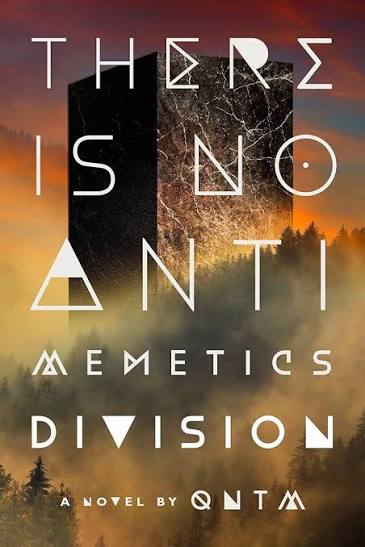
There Is No Antimemetics Division is inventive sci-fi that delivers on its wild premise. Marion avoids the obnoxious “girl boss” trap and feels genuinely competent. The ending gets a bit dizzying, but lands well. Unique, brain-bending read.

The King In Yellow Cover The King In Yellow Cover

The King in Yellow

The King in Yellow

It’s funny how curiosity works. One moment you’re deep in a rabbit hole of fan theories for a modern mystery show like From, and the next, you’re holding a weird, unsettling piece of 19th-century literature that feels like it’s staring back at you.

​That’s exactly how I found myself reading Robert W. Chambers’ The King in Yellow. After hearing rumors of a connection between the show’s mythology and this classic text, I set out to find the common threads. While the direct links weren’t as obvious as I’d hoped, what I discovered instead was an absolute gem of a novel that has stayed with me.

The opening stories are where the “King” truly reigns. These tales deal with supernatural dread, twisted realities, and the terrifying descent into madness. They revolve around a fictional, forbidden play—also titled The King in Yellow—that drives anyone who reads the second act to insanity. The atmosphere is thick, eerie, and highly engaging. As one who enjoys stories that make you question the stability of the world around you, this half is a masterclass in weird fiction.

Then, the tone shifts—abrubtly.  As I moved into the latter half of the book, the supernatural elements faded, replaced by what felt like an almost autobiographical account of the author’s time as an art student in Paris. While these stories were still entertaining, the shift from “cosmic horror” to “Bohemian romance” caught me off guard. It was a noticeable pivot that lessened the energy of the first half. 

​Even with the sudden change in direction, The King in Yellow is a captivating experience.

Notes From The Book:

The truth is an honest thief

Crimson nor yellow roses nor
The savor of the mounting sea
Are worth the perfume I adore
That clings to thee.
The languid-headed lilies tire,
The changeless waters weary me;
I ache with passionate desire
Of thine and thee.
There are but these things in the world—
Thy mouth of fire,
Thy breasts, thy hands, thy hair upcurled
And my desire.

The Great Good Thing Cover The Great Good Thing Cover

The Great Good Thing

The Great Good Thing

I’ve had The Great Good Thing on my shelf for a while—one of those books you intend to read but never quite do. Andrew Klavan’s earlier work, The Kingdom of Cain, had a disruptive effect on me, permanently shifting how I perceive the quiet messages buried beneath art and story.

I approached this book with more than curiosity; I had a sense of hope. I thought that if a writer could so clearly change my view of art, perhaps he could show me how to see God, too.

That isn’t what happened—at least, not in the way I expected.

Klavan’s conversion from secular Judaism is stubbornly personal. I went looking for a map—a reproducible path to follow—but discovered that such a thing cannot exist. It isn’t that he fails to explain himself; if anything, he explains his journey too well. Every intellectual turn and subtle nudge felt so specific to his own life that it became clear this outcome belonged solely to him. 

You cannot borrow his conversion.

Thinking about this, a scene from Between Two Fires kept rattling around in my head. When the old knight, Thomas, asks the girl why she didn’t appear in a way he would recognize, her answer is simple: “I had to come so you would find me.”

That feels like the heart of Klavan’s story. It isn’t a set of directions, but a specific alignment—something arriving in the exact form required for one specific person to follow.

Maybe that’s the frustrating part. Or maybe it’s the entire point.

Notes From The Book:

God is not susceptible to proofs and dis-proofs. If you believe, the evidence is all around you. If you don’t believe, no evidence will ever be enough. 

Oh the soul! The human soul! In the suburbs of fiction, she is forever dying. 

The world has no beauty of it’s own. The beauty of the world is created in the human experience. 

The point is not to “see” the world, the point is to experience it. To know it’s shape from without and within. 

The genesis of belief is no disproof of it. The truth remains the truth no matter how you come to find it. 

Jesus had to die, because we had to kill him. It was either that of see ourselves by his light as the broken things we are. 

William Blake believed The Bible is the great code of art.

Every good thing we know would be lost to us if they weren’t written down by a sinner with a pen.

The writing life is brutal on a wandering mind.

What was madness but the burden of genius in a world of fools. 

Sometimes you just have to play through the pain.

Gloom and despair are not the room-mates of the brilliant and wise.

Everything useful that can be done in the world can be done with joy. 

On the topic of church: The services are pretty, but I can’t stand the tuna casserole of it all. 

The 5 points of Andrew’s Faith Conversion: 

  • The Truth of Suffering
  • The Wisdom of Joy
  • The Reality of Love
  • The Possibility of Clear Perception
  • The Laughter at the Heart of Life

The past is never dead. It’s not even past. 


Between Two Fires Cover Between Two Fires Cover

Between Two Fires

Between Two Fires

Between Two Fires by Christopher Buehlman stayed with me longer than I expected.

It’s an odyssey in the truest sense. Part horror, part something that almost leans into science fiction—not in machinery or futurism, but in scale. 

The setting is bleak in a way that doesn’t feel exaggerated. A medieval landscape hollowed out by plague, haunted by demons, and stripped of any real sense of safety. It’s not just that the world is dangerous—it feels abandoned. It imagines a god that once kept things in order stepping away and leaving the world broken at a fundamental level.

At the center of it are characters who don’t feel heroic in the traditional sense. Thomas, worn down and uncertain, moving forward more out of momentum than conviction. And the girl, Delphine—quiet, strange, carrying something you don’t fully understand, but know matters.

What makes the book work is the way it moves. It doesn’t rush. It’s character driven first and the circumstances they find themselves in feel unpredictable and often deeply uncomfortable. There are moments where you genuinely don’t know what comes next—not because the story is chaotic, but because it refuses to follow the paths you expect.

You find yourself asking, “and then what happens?”—and not in a casual way. In a way that pulls you forward.

There’s also something underneath it all. A tension between faith and despair, between judgment and mercy. It never fully explains itself, which I appreciated. It trusts you to sit with it.

And that lingered.

Quotes From The Book:

“After all the horror, what matters is the quiet life you build—and the people you choose to care for.“

“Hell, like prison, is even worse when you feel you haven’t earned it. But that will grow numb with time.” 

Thomas: Why did you not come as I would know you?
Delphine: I came as you would find me.

You With The Sad Eyes Cover You With The Sad Eyes Cover

You with the Sad Eyes

You with the Sad Eyes

Christina Applegate’s You with the Sad Eyes is a memoir that splits itself between vulnerability and frustration, honesty and repetition. It’s a book that, at times, feels like a raw confession—and at others, like a loop the author hasn’t quite stepped out of.

A large portion of the narrative is devoted to her experience in an abusive relationship. Applegate writes candidly about trying, over and over again, to fix a man she once believed might actually kill her. She asks the reader for understanding, emphasizing how difficult it is to leave these kinds of relationships. Intellectually, I understand that. Emotionally, I struggled to stay with her. There’s a point where repeated bad decisions stop feeling tragic and start feeling exhausting. By the time she asks for sympathy, I didn’t have much left to give.

What complicates this further is that the relationship doesn’t feel entirely past tense. Even in reflection, there’s a sense that she hasn’t fully closed that chapter. It lingers in a way that makes the story feel less like something processed and more like something still actively echoing.

To her credit, Applegate insists she isn’t telling this story for sympathy, but to help other women recognize and escape similar situations. That intention is admirable, even if the delivery didn’t always land for me.

Running parallel to this is her lifelong struggle with self-esteem. She repeatedly returns to the idea that she never felt pretty enough to be worthy of love. It’s a strange tension—because she is, by any objective measure, beautiful—but it speaks to the deeper truth that self-image isn’t governed by reality. It’s often immune to validation.

Where the book truly finds its footing is in her discussion of illness. Her account of being diagnosed with multiple sclerosis is, without exaggeration, brave. Not in the performative sense, but in the quiet, honest way she allows the reader to see fear, anger, and grief without trying to dress it up. It’s honest and, at times, heartbreaking. If there’s a reason to read this book, it’s here.

She also reflects on her cancer diagnosis with a level of candor that’s surprisingly rare. She admits to presenting a version of herself that handled it “positively,” even when that wasn’t the full truth—acknowledging that this may have unintentionally discouraged or alienated other women going through the same thing. That kind of self-awareness, especially when it comes with regret, is refreshing. It’s one of the few places where the book feels fully self-interrogative rather than explanatory.

There are glimpses of what could have been a more traditional Hollywood memoir—stories about acting, co-workers, and life in the industry—but they’re often filtered through the lens of whoever she was dating at the time, or how she felt about herself at that moment. I found myself wanting more of her career, less of the emotional orbit around it.

In the end, You with the Sad Eyes is a deeply personal book that doesn’t always translate into a universally engaging one. It’s strongest when Applegate is confronting illness and her own contradictions head-on, and weakest when it circles the same emotional ground without new perspective. There’s honesty here—real, sometimes uncomfortable honesty—but whether that’s enough will depend on how much patience the reader has for the patterns she c

an’t quite break.
Quotes:

Toughness isn’t measured by how hard you punch, it’s measured by the set of your jaw.

Not A Speck of Light Cover Not A Speck of Light Cover

Not a Speck of Light

Not a Speck of Light

Most of the stories in the collection “Not a Spec of Light“, by Laird Barron are, frankly, boring.

There are a couple of standouts. “Don’t Make Me Assume My Ultimate Form” was the one that held my attention—the conversation between the Danny Doll and the character with the brain tumor had a strange, unsettling edge that actually worked.

“An American Remake of a Japanese Ghost Story” is probably the most clever piece in the book. There’s a good idea at its core, something that feels like it should linger—but it’s buried in a collection that never quite finds its footing.

The rest aren’t necessarily bad. They’re just not interesting.

That ends up being the real issue here. Story after story drifts by without grabbing hold, and the whole thing starts to feel like a chore to get through.

And that’s the disappointment—you keep waiting for it to click, it just never really happens.

Notes

Toughness isn’t measured by how hard you punch, it’s measured by the set of your jaw.

The Glassy Burning Floor of Hell Cover The Glassy Burning Floor of Hell Cover

The Glassy, Burning Floor of Hell

The Glassy, Burning Floor of Hell

The second book I got from Brian Stevenson, after the collection of stories A Collapse of Horses.

I was really hoping for more stories in the same vein as A Collapse of Horses (hoping really for another story to blow me away like the story “Click” from this collection.) Unfortunately, this was not the case. I could say this particular collection is weaker than Horses. 

The strongest story in the collection was “Nameless Citizen”. Not at the same level of “Click”, but a fun, albeit somewhat predictable, dystopian science fiction story with an interesting protagonist and clever set up. 

Many of the stories appear to communicate a deep loathing of humanity. Multiple characters throughout multiple stories are given the chance to save the human race and instead decide it should die.

This collection of stories didn’t impress much. 

Notes

Why is it that you only learn the specifics of conflict within your own family when you are grown and it’s too late to keep from being influenced by them unawares? Why only after you metabolize them and make them part of your way of seeing the world?

A Collapse of Horses Book Cover A Collapse of Horses Book Cover

A Collapse of Horses

A Collapse of Horses

Brian Evenson’s A Collapse of Horses was my introduction to the author, and it accomplished one of the best things a book can do: it made me immediately go out and buy another book by the same writer.

That alone says a lot.

The collection is made up of short stories that live somewhere between psychological horror and something stranger and harder to pin down. Most of the stories land slightly above the typical horror anthology standard. Evenson has a real gift for creating interesting characters and dropping them into unsettling or unusual circumstances. Often the premise itself is enough to keep you engaged, even when the story begins drifting into more ambiguous territory.

And ambiguity is really the defining feature of the collection.

Evenson has a noticeable fondness for vague endings—sometimes deliberately unresolved, sometimes so abrupt that they almost feel like the story stops mid-thought. That doesn’t make the stories bad, but a few of them left me feeling less satisfied than I hoped, still wanting to know what happened next. For readers who enjoy tidy conclusions, that tendency might be frustrating. For others, the lingering uncertainty may be exactly the point.

Where the collection truly shines is in the story “Click.”

“Click” isn’t just the standout of the anthology—it’s one of the best short horror stories I’ve read in a long time. The story leans heavily into a kind of liminal-space horror, where the rules of the world feel slightly off, like a dream that refuses to behave logically. The physics of the space itself feels unstable, almost feverish, and the tension comes not from overt scares but from the creeping realization that something about the world no longer makes sense.

The protagonist is compelling enough to anchor the surreal events around him, and the story keeps you engaged the entire time, constantly wondering what is actually happening and where it’s all going. It’s the kind of story that feels unsettling long after you’ve finished it.

Even with the occasional frustratingly vague ending, A Collapse of Horses succeeds at what the best horror collections try to do: it leaves an impression. Some stories linger more than others, but the atmosphere and ideas are strong enough that I’m already interested in exploring more of Evenson’s work.

And in the end, that might be the best review a book can get.