Menu

Books

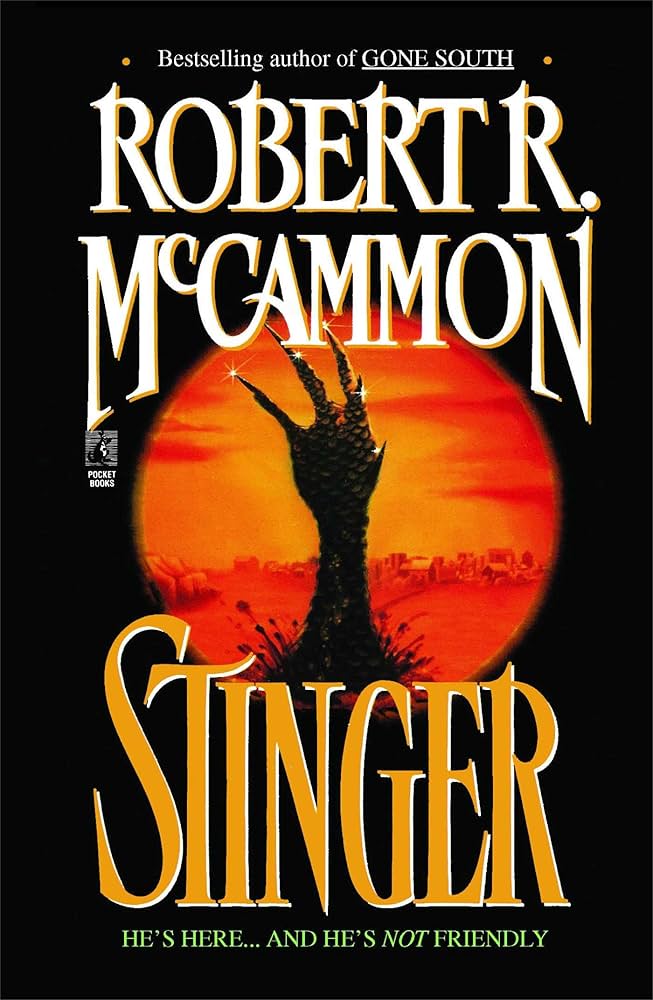
Stringer - Cover Stringer - Cover

Stinger

Stinger

What Could Have Been

My interest in Stinger started in a somewhat roundabout way. I first encountered the story through the television show Teacup streaming on Peacock. The premise immediately caught my attention: strange events, isolated characters, and a slow unfolding mystery that hinted at something much larger happening just out of view. Unfortunately, the show was cancelled after a single season, leaving the story unfinished and the characters suspended in mid-arc.

When I learned that the show was based on the novel Stinger, I figured the book might at least provide some closure—if not the same story, then the full version of the idea that had originally inspired the series.

The first thing that becomes clear when reading the novel is that the show and the book diverge pretty quickly. That’s not entirely surprising. A television series with only one season simply doesn’t have the room to develop the number of characters McCammon introduces in the novel. The book has the advantage of time, and McCammon uses it to build a fairly large cast of people with detailed backstories and complicated relationships.

In many ways, Stinger feels like classic 1980s science fiction. The central idea—an alien bounty hunter tracking its prey to Earth—is not completely unique, but it’s executed with enough imagination and tension to keep the pages turning. Once the story locks into its main conflict, the action scenes are tight and well written. McCammon clearly knows how to stage chaos, danger, and desperation in a way that keeps the reader invested.

Where the novel spends most of its energy, however, is not actually on the science fiction. Much of the book is devoted to the people: their pasts, their grudges, their friendships, and the complicated ways their lives intersect in a small, struggling town. None of this is necessarily a bad thing but at times it takes you out of the story.

For long stretches, the novel reads almost like a social drama about the people of the town. Then suddenly the narrative snaps back into alien pursuit, survival, and high-stakes action. Once the book gets moving in that direction, the pacing feels right. But it takes a while to get there.

Because of that, Stinger might have benefited from being a little shorter. The character development is effective, but at times it feels like it belongs to a slightly different kind of novel than the sci-fi thriller that eventually unfolds.

Still, once the story finds its rhythm, it delivers exactly what you might hope for from a piece of classic genre fiction: strange creatures, relentless pursuit, desperate alliances, and a steadily rising sense that the situation is spiraling beyond anyone’s control.

In the end, reading Stinger felt a bit like uncovering the full blueprint behind an idea I had only glimpsed through the television show. Even though the two versions take different paths, the novel provides the larger canvas—and a reminder of how ambitious and imaginative genre fiction from the 1980s could be.

Cruelly Yours Cover Cruelly Yours Cover

Yours Cruelly, Elvira: Memoirs of the Mistress of the Dark

Yours Cruelly, Elvira: Memoirs of the Mistress of the Dark

I went into Cruelly Yours expecting a book steeped in classic B-horror—the late-night movies and camp that made Elvira feel timeless. That part is there, but the book is far more interested in how Cassandra Peterson survived long enough to become Elvira in the first place.

Much of the memoir focuses on her early years: struggling as an actress, working as a Vegas showgirl, and growing up in a household with almost no boundaries. In her case, that freedom worked out. She built a career, found her voice, and created a persona that stuck. But the book doesn’t ignore the darker side of that upbringing. Her sisters weren’t as lucky, and the contrast lingers in uncomfortable ways. It’s hard not to wonder whether safer parenting might have spared a lot of pain—while also realizing that Elvira herself might not exist without that chaos.

The most fun moments come when she talks about auditioning for the role. While others tried to be dark and mysterious, she leaned into camp and humor. That choice didn’t just win her the part—it defined why Elvira worked. Even when discussing her own movie (which she freely admits isn’t great), her self-awareness keeps the stories light and enjoyable.

The book stays playful without feeling dishonest. Elvira isn’t a mask Cassandra hides behind; she’s something Cassandra built out of herself. That sincerity carries the memoir, even when the stories get wild or the name-dropping creeps in.

Cruelty Yours is best suited for fans of Elvira or readers who enjoy Hollywood memoirs. If you’re looking for a deep dive into classic horror films, you might want more. If you’re interested in how personality, timing, and survival collide in show business, this is a surprisingly thoughtful read.

What stuck with me most wasn’t the glamour—it was the cost. The book doesn’t celebrate the damage that shaped her, but it doesn’t deny it either. It just tells the story and lets you sit with the trade-offs.

Notes From Cruelly Yours,

No real profound take away from the book, however it did inspire an AI generated song: 

The Sea Gives Up The Dead The Sea Gives Up The Dead Cover

The Sea Gives Up The Dead

The Sea Gives Up The Dead

The Sea Gives Up the Dead is frequently marketed as a creepy, supernatural, or dark fantasy collection, but readers expecting tension or unease may find it underwhelming. The book favors mood and emotional introspection over plot, and many of the stories feel more like brief sketches than fully developed narratives. 

While the prose is often lyrical, the characters are lightly drawn and rarely experience anything that feels consequential or transformative.

This approach may resonate with readers who enjoy quiet, melancholic storytelling and subtle emotional themes, possibly appealing more to a younger or romantically inclined audience. For others, the lack of narrative momentum makes the collection feel bland rather than atmospheric. 

One of the later stories—an inversion of The Little Mermaid—stands out for committing more fully to its premise and using the supernatural in a meaningful way. Overall, the book isn’t poorly written, but it feels mis-marketed; those seeking genuinely creepy or impactful supernatural fiction may be disappointed, while readers drawn to gentle, mood-driven vignettes may appreciate it.

Tim Curry - Vagabond Cover Tim Curry - Vagabond Cover

Vagabond

Vagabond

Vagabond is a genuinely enjoyable read, especially for fans of Tim Curry and his long, eclectic career. Curry’s recounting of his iconic roles is entertaining and often surprisingly warm, filled with plenty of name-dropping that never feels boastful. Instead, he comes across as deeply genuine and sincerely grateful for the people he’s met and the opportunities he’s been given the chance to take advantage of.

My strongest critique of the book is simply that there isn’t more of it. Throughout, Curry respectfully casts others in a good light, rarely centering himself at their expense, which only reinforces the impression that he’s a real class act. Along the way, he sprinkles in small, thought-provoking lessons he’s learned throughout his life—nothing heavy or overly profound, just interesting perspectives on moments and situations many people might otherwise take for granted.

One of my favorite moments is his definition of a vagabond: someone who learns the lessons of the moment and keeps moving forward. It’s a simple idea, but it neatly captures the tone of the book itself—reflective without being sentimental, thoughtful without lingering too long.

The result is a memoir that feels conversational, appreciative, and quietly wise, like listening to Curry tell stories with humor and humility.

Notes from Vagabond

Curry’s definition of Vagabond: someone who learns the lessons of the moment and keeps moving forward. 

Whenever you get the chance, go look at the sea and the horizon. It opens up the mind. 

Explore your contradictions and follow them through to their logical conclusions. Nobody knows who they are for a very long time, if ever. Especially teenagers. 

Clue was my introduction to Tim Curry and he called working on that movie a highlight of his career. 

This world can quickly veer into a very boring place, a very cynical place, or a very twisted place depending upon where you train your gaze and what you choose to absorb. 

I cannot imagine I would still be alive, nor would I want to continue living, if I didn’t have immediate access to humor and absurdity. 

The only song of his that Tim Curry still listens to and wishes he found a better ending for: Working on My Tan.

Episode13 Cover Episode13 Cover

Episode 13

Episode 13

The Comfort of Unease

Some stories don’t rely on jump scares or constant escalation. They sit with you. They pace the room. They let the silence stretch just long enough that you start filling in the gaps yourself. Episode Thirteen is one of those stories and I loved it.

From the start, the novel reads like a well-executed found footage film — interviews, transcripts, recovered documents — all stitched together with intention. It’s a familiar format, but it’s handled with confidence and restraint. The buildup is patient, deliberate, and unsettling in a way that feels earned rather than forced. And when the payoff finally comes, it lands. Solidly.

The characters help carry that slow burn. They feel real, grounded, and flawed in ways that make their reactions believable. Kevin, the retired cop, stood out in particular — pragmatic, weary, and human in a genre that sometimes leans too hard into archetypes. He feels like someone you’ve met before, which makes the creeping dread around him all the more effective.

The setting plays its own quiet role. Foundation House in Virginia — a real place, which naturally raises questions. Was this based on true events? Was there an actual haunting, some buried history, something left behind? The novel wisely never leans too hard on answers, letting implication do the work. That uncertainty becomes part of the horror itself.

There’s also an interesting undercurrent running through the story — the idea of science brushing up against the unknowable. The question of whether Thomas Edison once believed it might be possible to communicate with the dead lingers in the background, not as a gimmick, but as a reminder that curiosity doesn’t always come with guardrails. Sometimes progress and obsession look the same from the outside.

Tonally, the book gave me strong Alan Wake vibes — that sense of reality thinning at the edges — mixed with the existential dread of The Abyss and just a touch of Grave Encounters’ descent-into-madness energy. It sits comfortably in the liminal horror space, where the fear isn’t always what’s seen, but what’s implied, half-glimpsed, or just out of frame.

By the end, Episode Thirteen feels like the kind of story that wants to be adapted. Not because it needs more spectacle, but because its structure and atmosphere already think cinematically. It’s the rare horror novel that understands restraint, trusts its audience, and delivers a conclusion that feels both unsettling and satisfying.

“The universe is full of wonderful things waiting for our wits to sharpen to notice them.”

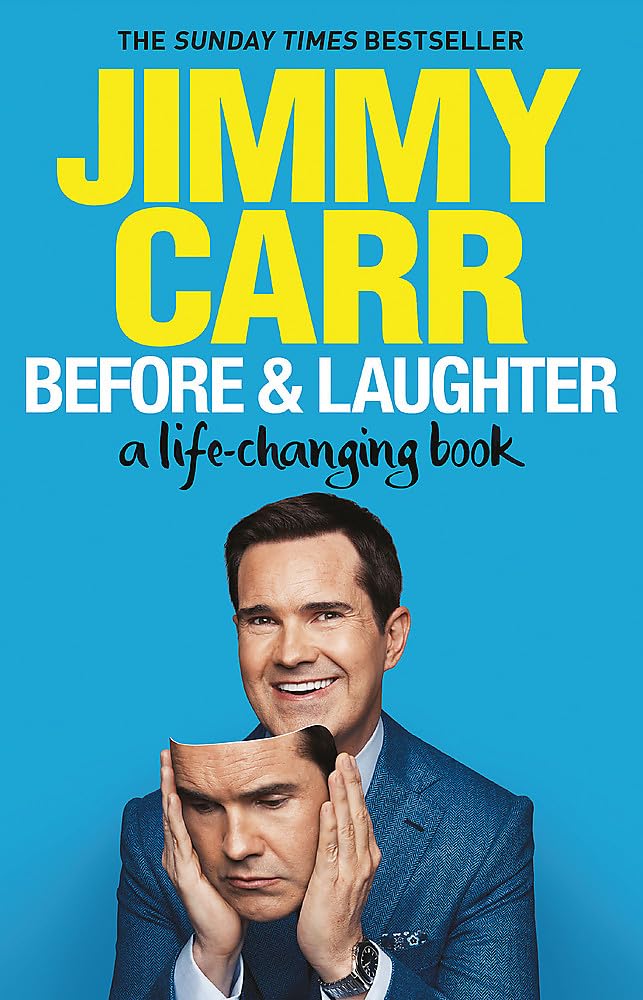
Before and Laughter Cover Before and Laughter Cover

Before and Laughter

Before and Laughter

Rational and Achievable

Before and Laughter isn’t a joke book, though it’s written by a comedian. Instead, it’s something quieter and more surprising: a compact manual for living better, delivered in a voice that never talks down to you.

What makes the book work so well is how approachable it is. Carr isn’t offering revolutionary new ideas or flashy self-help gimmicks. The advice here is timeless—almost frustratingly obvious in places—but that’s the point. These are truths most of us already know and have simply forgotten. Carr strips them down, removes the alarmist tone common to self-help, and presents them in a way that feels calm, rational, and achievable.

It’s also important to understand that Before and Laughter is a memoir. The ideas Carr shares aren’t abstract theories lifted solely from philosophy or psychology texts; they’re rooted in his own life, shaped by experience, missteps, reflection, and course correction. That personal grounding matters. It’s why the advice never feels preachy or academic—you’re not being instructed from a distance, you’re being let in on what he’s learned by actually living.

A recurring theme throughout the book is the importance of setting goals, taking action, and embracing sacrifice—particularly the willingness to give up comfort now in order to live better later. It’s an old idea, but Carr frames it with clarity and restraint. Discipline is encouraged without moralizing, and progress is framed as something built through small, deliberate choices rather than dramatic overhauls.

Carr is also clearly well read, and he wears that knowledge lightly. His references range from C.S. Lewis to Garry Shandling, creating an eclectic but thoughtful mix that reinforces the book’s central ideas. The quotes never feel decorative; they serve as guideposts, reminding the reader that this kind of wisdom has surfaced again and again across time, disciplines, and personalities.

Despite its relatively short length, Before and Laughter is a dense book. Nearly every page contains something worth underlining or revisiting. It’s the kind of book you can finish quickly but return to often, pulling something new from it depending on where you are in life.

At its best, Before and Laughter is equal parts practical advice and genuine inspiration. It doesn’t promise transformation, but it quietly suggests that change is possible—if you’re willing to think clearly, act intentionally, and delay gratification just a little longer.

If you allow its calm, human tone to reach you, this book can be a genuine life-changer. Not because it shouts or dazzles, but because it patiently reminds you of things you already knew—and encourages you to finally do something with them.

My Notes:

The source of all humor is not laughter, but sorrow. – Mark Twain

I used to think the human brain was the most important part of my body, but then I thought, “look who’s telling me that”. 

We have one life to live and sometimes that’s too much. 

A sense of humor and common sense are the same thing running at different speeds. A sense of humor is common sense dancing. 

Anxiety is creativity with nothing to do

“Do the duty closest to thee, and thy second duty will become clearer.” – Thomas Carlye

Models are on the clock. Good looks are fleeting. 

It’s better to be hated for who you are than loved for who you aren’t. I don’t know the guy, but I love him.  

I used to be a people pleaser, but then I read that people don’t like people pleasers, so I stopped. 

If you focus on improving your weakness you just might become very average, but if you focus on your strengths you just might become the best version of you. 

Short term goals are good for you because they keep you grounded. 

You only ever get to meet your real wife when you are getting a divorce. – Chris Rock

You would be lucky in life to find five people that are genuinely interested in who you are as a person. 

Good judgement is the result of experience, Experience is the result of bad judgement. 

I’ve stepped in puddles that are deeper than humanity. 

People are going to make snap judgements about you. Make your peace with that. 

I lost years of my life trying to live up to the expectations of other people.

If you can’t decide, then the answer is no. 

You will be judged based on what you’ll do, not what you will say you will do. 

Your current habits are perfectly designed to deliver your current results. 

The future is already here, it just isn’t evenly distributed. 

A good aspect about grief is that it opens your heart to others. 

Avoiding situations in which you might make mistakes is the biggest mistake of them all. 

You can always edit a bad page. You can’t edit a blank page. 

How you can get good at a situation is to get into that situation over and over again. 

Embarrassment now is worth it for the story later. 

Inspiration is for amateurs. The rest of us show up for work. 

It’s better to be uncomfortable than bored. 

One doesn’t realize the price of freedom is loneliness. To be happy is to be tired. 

Be a hypocrite or be the same person you are now for the rest of your life. When is the last time you changed your mind about something meaningful? 

Make a to-do list. Make hard choices. Hard choices: easy life. Easy choices: hard life. 

Fake it. Pretending to be and being are indistinguishable to the casual observer. 

Ask yourself, “What do I want?” ask yourself all the time. 

Compare and despair. The only comparison you should be making is to your past self. 

The secret to happiness: do more. Expect less. 

Health, work and home are the three legs of the tripod that are holding up your life. 

Lean into what you’re good at and lean into what you’ve got. 


Some people will hate you for not hating yourself and I really hate that.

This Thing Between Us Cover This Thing Between Us Cover

This Thing Between Us

This Thing Between Us

Grief Without a Payoff

This Thing Between Us is a book that left me thoughtful, but not entirely satisfied. It wasn’t quite what I expected, and that gap between expectation and execution shaped my experience more than anything else.

At its strongest, the novel offers sharp observations about grief. Moreno presents it not as a process with a clear endpoint, but as something invasive and consuming. Grief here lingers, isolates, and quietly reshapes the world around it. When the horror elements stay indistinct — more atmosphere than explanation — the book is genuinely unsettling.

Where it struggled for me was in its commitment to ambiguity. The story gestures toward something larger and more cosmic, but consistently resists clarity or escalation. This seems intentional, but it can leave the narrative feeling emotionally distant, especially for readers hoping for a more defined payoff.

The novel builds toward an ending that emphasizes theme over resolution. Rather than offering answers or closure, it leans into the idea that some experiences — grief especially — don’t resolve neatly. For some readers, that refusal will feel honest and powerful. For others, it may feel like the story pulls back just when it seems ready to sharpen its focus.

I didn’t dislike This Thing Between Us. It’s thoughtful, occasionally unsettling, and clearly purposeful in what it’s trying to do. But it’s also uneven, and its reliance on abstraction left me more contemplative than moved. A worthwhile read, just not one that fully landed for me.

Who knew that the shudder would supplant grief in the mind? People cannot bear to think that there are channels of human experience closed off to them. That they’ll never know. People want to believe that their human experience is universal, that there is nothing outside their scope.

Mr. Magic Book Cover Mr. Magic Book Cover

Mr. Magic

Mr. Magic

When Horror Preaches Itself To Death

There is a version of Mr. Magic that should have been perfect for me. A half-forgotten children’s television show from the 1980s. Damaged former child actors. Missing tapes. The uncanny feeling that something once comforting was quietly poisonous. On paper, this is pure fantasy gold. In practice, it felt like sitting through a lecture disguised as a lame episode of “Are you afraid of the Dark”.

The story itself evokes parts of Channel Zero (especially seasons one and four) with dashes of Stephen King’s The Institute: eerie childhood spaces, institutional control, adults shaping children into something they never agreed to be. That atmosphere works. The bones are there. But the book never trusts those bones to hold weight on their own.

Early on, the main character, Val, nearly torpedoes the book by herself. She “girl-bosses” her way out of any real likability — abrasive, defensive, and emotionally closed off in a way that doesn’t feel layered so much as performative. Instead of being someone you slowly understand, she’s someone who keeps telling you what she is and why she’s right.

I lost track of how many times some version of “I was really happy back then” gets repeated. Nostalgia is supposed to feel unreliable and haunted. Here, it just feels self-indulgent — a mantra rather than a mystery. And that’s the core problem. Good horror lets you discover the rot. Mr. Magic keeps stopping to tell you what the rot is.

Instead of letting the lost TV show speak for itself, the book keeps explaining: this is about religious trauma, this is about control, this is about how rules ruin children, this is why the author is angry. The result is a story that feels less like being slowly unsettled and more like being walked through a therapy session.

It comes across as a metaphor for how the rules parents place on children inevitably destroy them — which would be a far more compelling idea if it weren’t presented so bluntly and without nuance. The implication seems to be that children should be freed from structure entirely, because after all, if there’s any demographic that really has a firm grasp on how reality works, it’s children.

Right.

By the time the book reaches its big emotional and thematic moments, the horror and interest has already evaporated. Nothing lingers. Nothing breathes. The story doesn’t trust you to understand it on your own — it insists on telling you exactly what you’re supposed to think.

I can’t recommend avoiding this book enough.

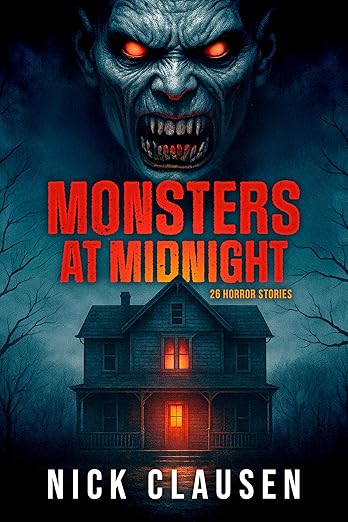
Monsters at Midnight Cover Monsters at Midnight Cover

Monsters at Midnight

Monsters at Midnight

Monsters at Midnight is an uneven but revealing short-story collection—one that ultimately feels more like a document of growth than a fully realized whole. The book starts very poorly, with the first quarter bordering on insufferable. That rough opening makes it difficult to stay engaged, but there is a clear reason to keep going: the stories are arranged chronologically, and Clausen’s improvement as a storyteller becomes increasingly obvious as the collection progresses.

One recurring issue is the heavy reliance on child protagonists. Many of these characters come across as whiny or irritating, and their behavior often pulls focus away from otherwise strong ideas. This problem is compounded by a repeated detail that becomes difficult to ignore: police are frequently depicted questioning minors without a parent or guardian present. While minor at first, its constant reappearance undermines the realism of the stories and reinforces the sense that these characters and situations aren’t always fully thought through.

That said, when the collection works, it works well. Several stories stand out as genuinely engaging. Lights Out is a strong, imaginative tale about a child who gains the ability to turn off the lights. Babysitter features an excellent setup and builds tension beautifully, though its “open to interpretation” ending feels like a cop-out after such a promising start. Deadly Dreams maintains suspense throughout, keeping the reader invested in what might happen next. A Taste for Blood delivers a classic vampire story told in a lively and entertaining way. Eternal Snow is the clear highlight of the collection—a quietly unsettling Christmas story about a family encountering something strange on the way to their grandmother’s house.

Interestingly, the strongest stories appear in the “previously unpublished” section, which suggests that Clausen’s best work may not have been his most visible until now. By the end, Monsters at Midnight feels like a collection that rewards patience, offering glimpses of real talent and momentum, even if its early missteps and recurring issues prevent it from fully coming together.

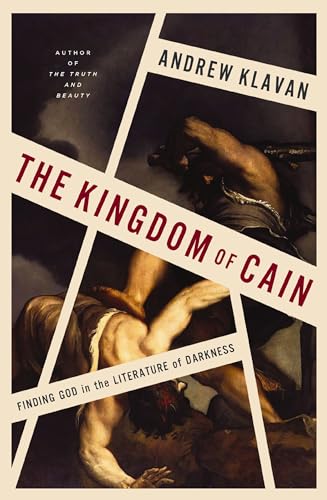
The Kingdom of Cain Cover The Kingdom of Cain

The Kingdom of Cain

My Notes:

“My choice to follow Jesus has shaped the way I define evil…Evil is the absence of love.”

“The opposite of murder is creation—creation, which is the telos of love. And because art, true art, is an act of creation, it always transforms its subject into itself, even if the subject is murder. An act of darkness is not the same thing as a work of art about an act of darkness.”

“…when an artist uses his imagination to create a true work of art about murder, he is confronting death with art, making creation out of destruction, containing evil within an act of love.”

“From our first cry to our last one, life is little more than letting go, a long goodbye. The pain, the grief, the traumas physical and emotional that scar our minds: sorrow is so woven into the very fabric of material existence that to turn our faces from it is to turn away from life itself, In the presence of our mourning mortality, even Jesus wept.”

“It is the awful things that raise the big questions, that limn our doubts about morality and meaning, that heighten our suspicion of ourselves, and stir our secret shame at the half-hidden truth of our own nature. Humanity is revealed in its sin, because humanity is sinful.”

“To acknowledge the existence of God is to confront the reality of the moral order. Morality is not a fiction, or an evolutionary emanation, or a social construct, or a subjective narrative dependent on culture, time, and place. It is the human perception of a spiritual truth. Like everything else we know, we know it only in part… Because the world, for all its sweetness, is not at all what it should be. The very atmosphere is riddled with corruption.”

“Because it is not in heaven but in this world that we are called to rejoice, this world of such terrible darkness. It is here and now that we are commanded to make what we see into the beautiful. Not in a better past. There never was one. Not in a future utopia. There will be none until Christ returns. And that flatters believers with a happy ending. There are no happy not in the dreamy warmth of some hymn-singing Christian tale endings, not in this, the only life we know. No happy endings, no innocent cultures, no righteous people, no better yesterday or tomorrow. There is only this life, this moment, in which we must cultivate the peace that passes understanding and grow the creative joy that is Christ in us. We have only one sinful self to love. Only sinful others to love as we love ourselves. There is no one to point a finger at who is not our own reflection. There is no one to forgive but everyone… We are called to joy. Here. Now. In a world full of murder. In the kingdom of Cain.”

“The cannibal is the model of mankind, the truth we hide behind our social graces.”

“What Alfred Hitchcock understood understood even if he did not understand he understood it-was what Dostoevsky understood and Nietzsche too: that the long withdrawing tide of faith was the central event of our time, maybe the only event that really mattered, and the collapse of the Christian moral order would inevitably follow, was following.”

“Art, in the end, can only portray man’s soul in the age through which it is living.”